Story #12 - Discovering the Truth Behind Wine
May 1st, 2026 | Alexander Mackh, Co-Founder
There is a difference between enjoying wine and understanding it.
Pleasure is personal. One may prefer richness over tension, softness over structure, or immediacy over complexity. But the truth of a wine exists independently from preference. It lies in what the wine actually expresses: the grape variety, the place from which it comes, the conditions of the vintage, and the decisions made by the people who produced it.
A warm and generous summer leaves a different imprint than a cold and difficult one. Rain changes structure. Sun changes ripeness. A wine grown on limestone speaks differently from one grown on clay. A producer seeking precision will shape a wine differently than one seeking power. All of these details remain inside the liquid.
The question is whether the glass allows them to be seen clearly.
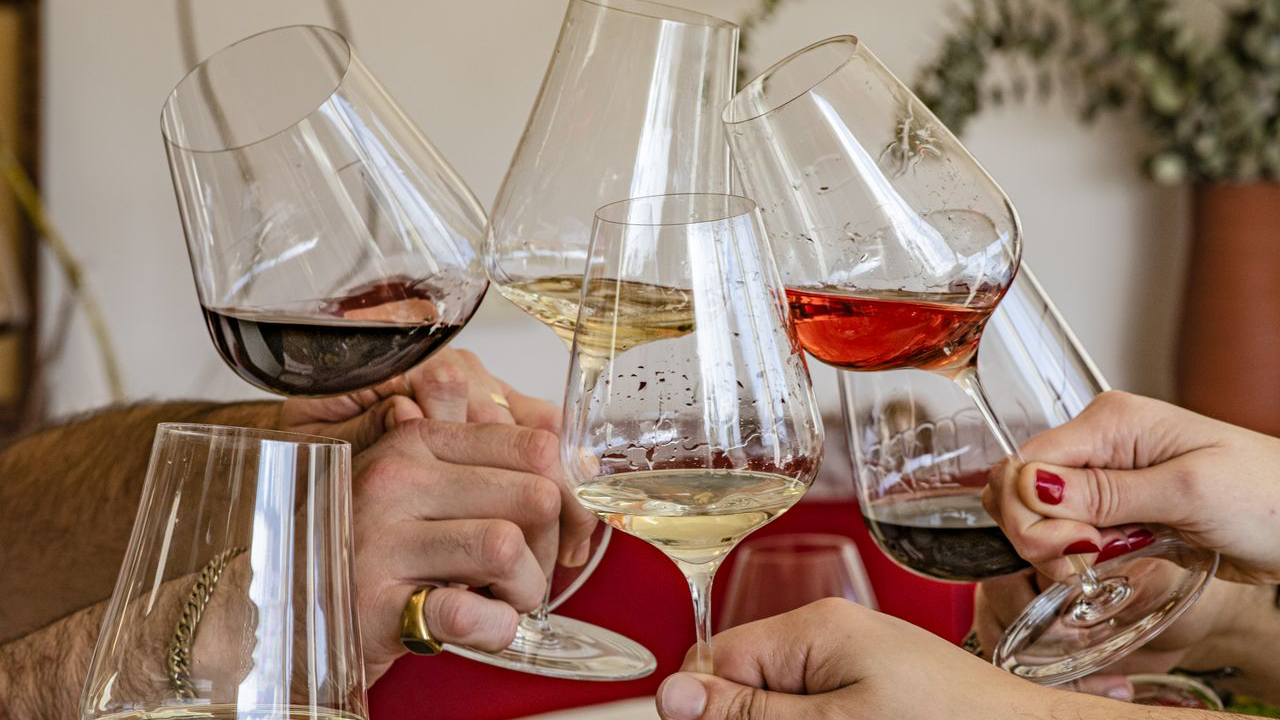
That is where glassware becomes important. Not as decoration, and not as ritual, but as a tool for revealing identity.
At first glance, every wine glass appears similar. A bowl, a stem, and a base. Yet the proportions of the bowl — its width, height, opening, depth, and volume — dramatically influence how a wine is perceived. The same wine can appear broader, sharper, heavier, softer, more aromatic, or more restrained depending entirely on the shape from which it is tasted.
The glass does not change the wine itself.
It changes the clarity with which the wine is understood.
That leads to one of the central questions in glassware: does truth lie in one universal glass, or in choosing specific glasses for different wines?
The universal glass is perhaps the most objective approach. It removes complication from the experience. There is no need to analyse which shape belongs to which wine. One simply pours and tastes. Whether sparkling, white, or red, the glass should perform consistently enough to reveal the wine honestly.
That simplicity has value.
A good universal glass is balanced. Too large, and delicate wines lose tension and precision. Too small, and structured wines become compressed and muted. The proportions must sit carefully between both worlds. For many drinkers, this is more than enough. Not every person wishes to adjust the vessel to every bottle. In the same way that one may wear the same pair of shoes both casually and formally, the universal glass becomes an adaptable solution rather than a specialised instrument.
Yet wine itself is not universal.
White wine and red wine already ask for different conditions. White wines rely heavily on freshness, acidity, and definition. Smaller bowls tend to preserve those elements more clearly. Red wines, by contrast, often carry more tannin, texture, and structural weight. They require additional volume and oxygen to reveal themselves fully.
That is why the separation between white and red wine glasses exists in the first place. Not as marketing, but as function.
The same logic continues further.
Not all red wines behave alike. Merlot naturally carries more breadth and tannin than Pinot Noir. Syrah speaks differently from Nebbiolo. Some wines are broad, dark, and powerful. Others are lifted, delicate, and transparent. Each expression reacts differently inside a glass.
An elegant Pinot Noir placed into an oversized bowl may lose its shape entirely. The perfume becomes diluted, the structure less focused, the identity less clear. Conversely, a dense and structured wine served in a smaller, restrained glass may feel compressed and simplified, unable to unfold properly.
The purpose of the glass is therefore not to manipulate the wine, but to allow the wine to remain itself.
At the highest level, this precision becomes even more detailed. One begins not only to choose glasses for grape varieties, but for regions, villages, and even specific expressions within those villages.
Burgundy offers perhaps the clearest example of this idea.
In Gevrey-Chambertin, Pinot Noir often speaks with greater structure, darker fruit, and more grounding power. Chambolle-Musigny, by contrast, tends toward perfume, elegance, and delicacy. The grape remains the same. Sometimes even the producer remains the same. Yet the expression changes because the place changes.
And because the expression changes, the proportions of the ideal glass may change as well.
A broader shape may allow the darker and more structured nature of Gevrey-Chambertin to open fully. A more restrained and precise shape may preserve the lifted and feminine character of Chambolle-Musigny. The intention is never to force similarity between wines, but rather to make their differences easier to recognise.
That is ultimately the purpose of great glassware.
Wine already contains the information.
The grape.
The region.
The vintage.
The climate.
The hand of the grower.
A glass can either obscure those details or reveal them.
When the proportions are correct, wine becomes more transparent. Its identity becomes easier to understand. The wine begins to speak more clearly of where it comes from and what it truly is.
And that, ultimately, is the truth behind wine.